
The Peugeot 307 SW (2005-2008) is an estate with a panoramic glass roof and electrically operated roof shade. Its electrical distribution changed during 2005: the Peugeot owner’s handbook of 28 February 2005 uses an earlier cabin and Maxi fuse list, whereas the 1 October 2005 handbook and 2007-2008 documents describe different accessory and high-current supplies. All 101 source entries, including 14 quick-reference rows, are retained in seven separate tables rather than merging incompatible ratings.
Where are the Peugeot 307 SW fuse boxes?
Passenger compartment: Switch the ignition off. On a left-hand-drive car, locate the lower dashboard fuse cover on the driver’s side, turn the latch a quarter-turn and lower the flap carefully. The plastic fuse puller and spares may be attached to the cover. Right-hand-drive handbooks can instead specify access via the passenger glovebox. The adjacent BSI module should not be unplugged to check a fuse.
Under the bonnet: Find the covered engine fuse carrier next to the battery, release its catches and locate the standard F-series sockets and the separate high-current MF links. Some engine panels have two physical carrier variants; F15-F18 are specified only for the type 1 arrangement. On later cars an F41 position may serve the six-speed automatic gearbox. Always close the box lid tightly against moisture.
Distinguishing the early and facelifted electrical layouts
The simplest test is the luggage-compartment 12 V socket: in the early 2005 SW it uses cabin F8 at 20 A, while the front socket uses F9 at 30 A. From late 2005, both sockets are powered through F9 at 30 A. Early cabin F12 is unused, while the later F12 is a 15 A feed to parking assistance or driving-school equipment. Under the bonnet, starter control F8 has 20 A in the 2005 documents but can be 25 A in a later 2007.5 manual. Do not increase a fuse rating without confirming the fitted circuit.
Popular SW fuse positions
This index repeats positions from the detailed tables below. Numbers F2 and F12 in the engine box are different physical circuits from F2 and F12 in the dashboard.
| Pozycja | Amperaż [A] | Chroniony obwód / funkcja |
|---|---|---|
| F9 | 30 | Early 2005 – front 12 V outlet / cigarette lighter in cabin |
| F9 | 30 | Late 2005-2008 – front 12 V outlet / lighter in cabin |
| F8 | 20 | Early 2005 – rear 12 V socket in cabin |
| F9 | 30 | Late 2005-2008 – rear 12 V socket shares F9 with front socket |
| F1 | 15 | Early 2005 – rear tailgate wiper in cabin |
| F1 | 15 | Late 2005-2008 – rear tailgate wiper in cabin |
| F17 | 40 | Early 2005 – heated rear glass in cabin |
| F17 | 40 | Late 2005-2008 – heated rear glass in cabin |
| F2 | 15 | Early 2005 – horn, ENGINE compartment F2 |
| F2 | 15 | Late 2005-2008 – horn, ENGINE compartment F2 |
| F12 | 30 | Early 2005 – front wipers, ENGINE compartment F12 |
| F12 | 30 | Late 2005-2008 – front wipers, ENGINE compartment F12 |
| F39 | 20 | Early 2005 – heated front seats in equipped versions |
| F39 | 20 | Late 2005-2008 – heated front seats in equipped versions |
Passenger-compartment fuse box – early 2005
The February 2005 reference includes rear wiper F1 (15 A), rear 12 V supply F8 (20 A), front 12 V socket F9 (30 A), rear demister F17 (40 A) and optional heated-seat F39 (20 A). F12 is unused and F16 is a special PARC mode shunt, not a normal amperage-rated fuse.
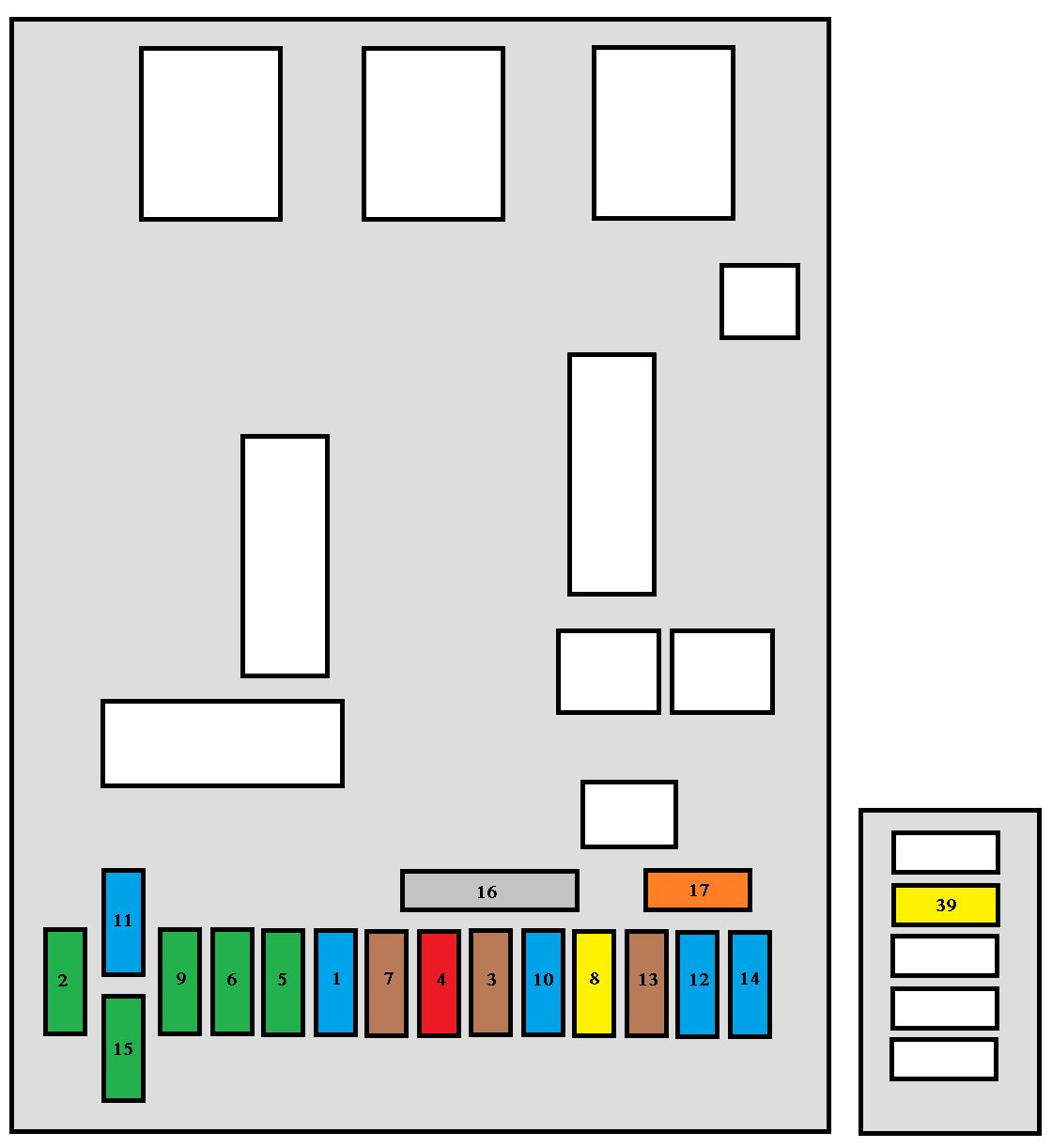
| Pozycja | Amperaż [A] | Chroniony obwód / funkcja |
|---|---|---|
| F1 | 15 | Tailgate rear windscreen wiper motor |
| F2 | 30 | Central door locking and deadlocking |
| F3 | 5 | Airbag ECU and pyrotechnic seat-belt pretensioners |
| F4 | 10 | Brake/STOP and clutch switches, engine coolant-level sensor, steering angle and ESP, FAP additive pump, diagnostic connector and electrochromatic mirror |
| F5 | 30 | Front electric windows, panoramic roof blind and heated mirrors |
| F6 | 30 | Rear electrically operated windows |
| F7 | 5 | Front and rear courtesy lights, glovebox lamp and panoramic blind switch |
| F8 | 20 | Audio, telephone, display, alarm, rear 12 V socket, trailer module and steering-wheel controls |
| F9 | 30 | Front 12 V lighter / accessory socket (rear socket is separately supplied) |
| F10 | 15 | Automatic transmission controller and brake-pedal STOP switch |
| F11 | 15 | Diagnostic connector, low-current ignition feed and particulate-filter control |
| F12 | – | Unused in the early 2005 SW panel |
| F13 | 5 | Engine electrical carrier power feed, rain and light sensor |
| F14 | 15 | Trailer module, instrument cluster, automatic A/C, SRS unit, pretensioners and optional hands-free kit |
| F15 | 30 | Central locking and deadlocking main supply |
| F16 | Shunt | PARC parking / transport configuration shunt; not an ordinary fuse |
| F17 | 40 | Heated rear window, NOT the front windscreen |
| F39 | 20 | Heated front seats when factory installed |
Passenger-compartment fuse box – late 2005-2008
After the electrical change, F9 (30 A) serves front and rear sockets, F12 (15 A) protects the optional rear parking aid and F39 (20 A) is present only with heated seats. F17 (40 A) protects the rear window demister, not the windscreen.
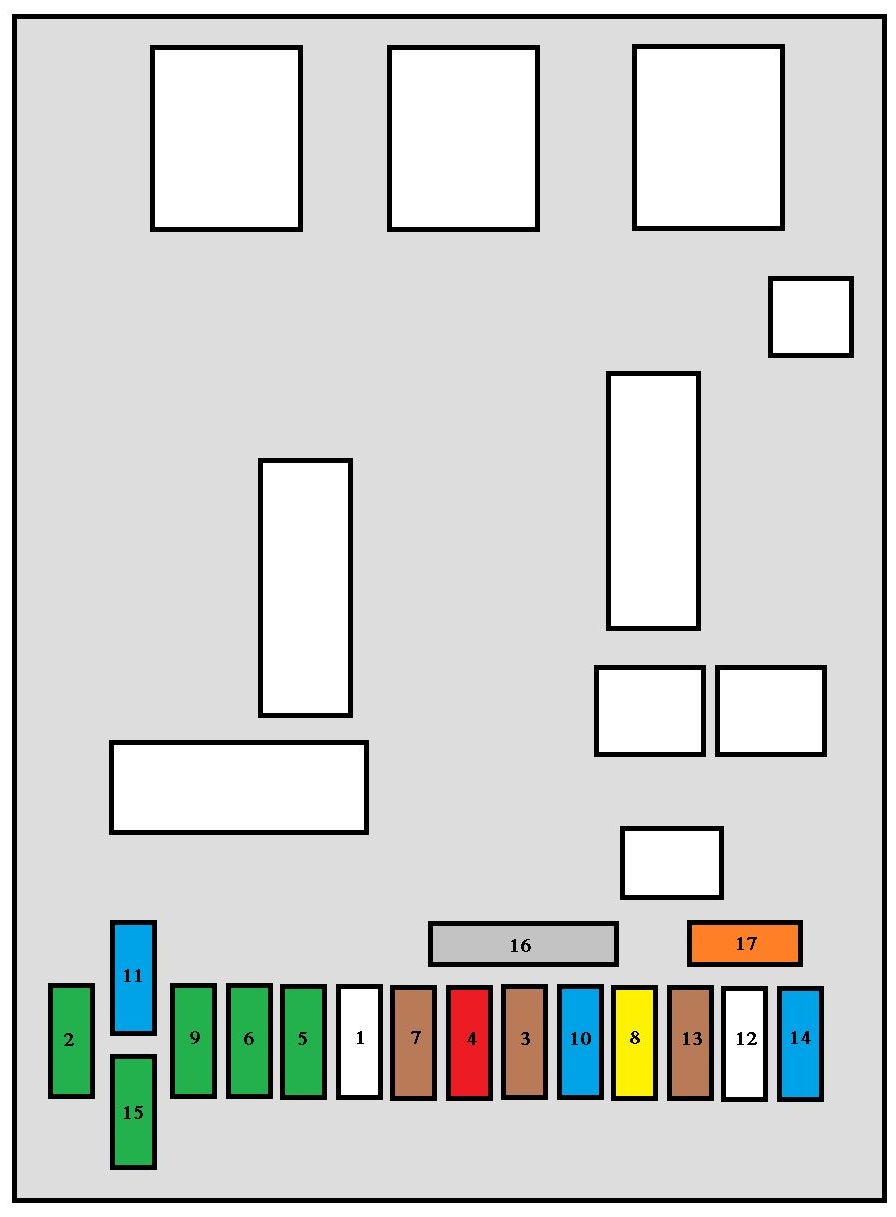
| Pozycja | Amperaż [A] | Chroniony obwód / funkcja |
|---|---|---|
| F1 | 15 | Tailgate rear windscreen wiper motor |
| F2 | 30 | Central door locking and deadlocking |
| F3 | 5 | Airbag ECU and pyrotechnic seat-belt pretensioners |
| F4 | 10 | Brake/STOP and clutch switches, engine coolant-level sensor, steering angle and ESP, FAP additive pump, diagnostic connector and electrochromatic mirror |
| F5 | 30 | Front electric windows, panoramic roof blind and heated mirrors |
| F6 | 30 | Rear electrically operated windows |
| F7 | 5 | Front and rear courtesy lights, glovebox lamp and panoramic blind switch |
| F8 | 20 | Radio, telephone, display, alarm, trailer control, driving-school module and steering-wheel controls |
| F9 | 30 | Front AND rear 12 V accessory outlets, after the fuse allocation revision |
| F10 | 15 | Automatic gearbox, tyre-pressure monitoring and STOP switch |
| F11 | 15 | Diagnostic connector, low-current ignition feed and particulate-filter control |
| F12 | 15 | Driving-school electrical module and rear parking aid |
| F13 | 5 | Engine electrical carrier power feed, rain and light sensor |
| F14 | 15 | Trailer module, instrument cluster, automatic A/C, SRS unit, pretensioners and optional hands-free kit |
| F15 | 30 | Central locking and deadlocking main supply |
| F16 | Shunt | PARC parking / transport configuration shunt; not an ordinary fuse |
| F17 | 40 | Heated rear window, NOT the front windscreen |
| F39 | 20 | Heated front seats when factory installed |
Engine-compartment fuses – early 2005
F2 (15 A) supplies the horn, F11 (40 A) the A/C blower and F12 (30 A) the windscreen wipers. F8 at 20 A is the ignition/start supply. F4 may be unoccupied or protect 20 A headlamp washers depending on equipment and market. The original box drawing is reproduced directly before the matching technical list.
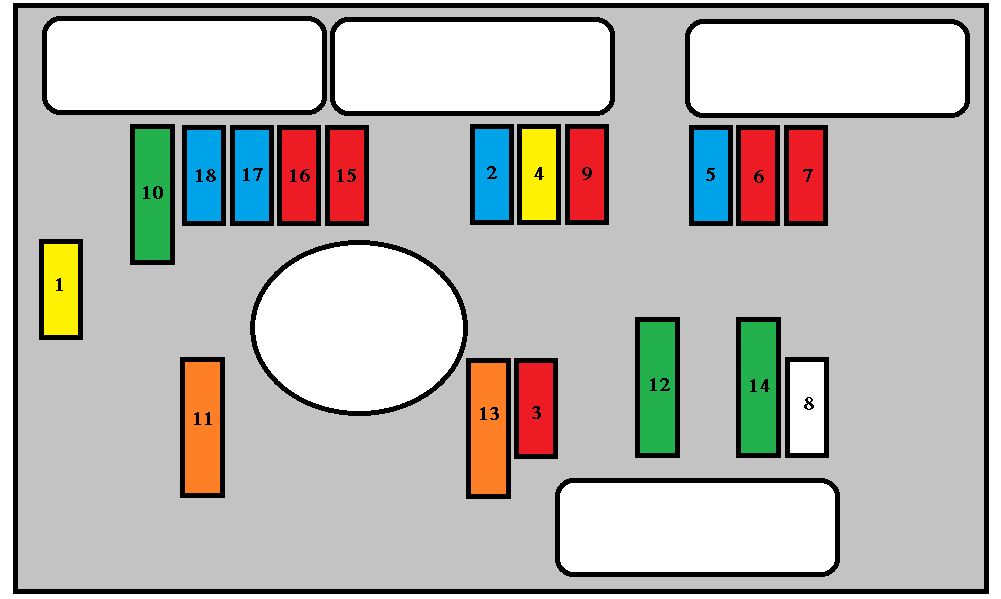
| Pozycja | Amperaż [A] | Chroniony obwód / funkcja |
|---|---|---|
| F1 | 20 | Engine control ECU and radiator cooling fan high-speed relays |
| F2 | 15 | Horn |
| F3 | 10 | Front and rear washer pumps |
| F4 | – / 20 | Headlamp washer feed on equipped models; unused in some early 2005 markets |
| F5 | 15 | Fuel pump and evaporative canister purge solenoid, depending on engine |
| F6 | 10 | Four-speed automatic gearbox ECU, selector lock, control switch, fan relay and optional Xenon equipment |
| F7 | 10 | ABS/ESP ECU and electric power-steering pump controller |
| F8 | 20 | Ignition switch and starter solenoid control at the 2005 factory rating |
| F9 | 10 | Additional diesel heating, coolant-level warning switch |
| F10 | 30 | Engine management actuators, ignition coils, solenoids, oxygen sensors, injectors and petrol/diesel fuel equipment |
| F11 | 40 | Heater and air-conditioning blower motor |
| F12 | 30 | Front windscreen wiper motor, low and high speeds |
| F13 | 40 | BSI body systems interface supply after ignition |
| F14 | 30 | Secondary air pump on certain 2.0-litre petrol engines |
| F15 | 10 | Right main-beam headlamp |
| F16 | 10 | Left main-beam headlamp |
| F17 | 15 | Left dipped-beam headlamp |
| F18 | 15 | Right dipped-beam headlamp |
Early 2005 high-current Maxi fuses
This original SW specification has MF3 80 A, MF4 80 A, MF5 50 A and MF6 50 A, plus ABS pump MF2 and electric steering pump MF8. MF1 changes between 30 and 50 A based on the factory fan assembly. These values are not a substitute for those of the later Break or SW system.
| Pozycja | Amperaż [A] | Chroniony obwód / funkcja |
|---|---|---|
| MF1 | 30 / 50 | Radiator cooling fan, 30 A for a 200 W assembly or 50 A for a 400-460 W assembly |
| MF2 | 30 | ABS/ESP hydraulic pump |
| MF3 | 80 | ABS/ESP solenoid valves |
| MF4 | 80 | First main BSI power feed |
| MF5 | 50 | Second main BSI power feed |
| MF6 | 50 | Passenger-compartment fuse carrier main feed |
| MF8 | 70 | Electric power steering pump high-current supply |
Under-bonnet fuses – late 2005 to 2008
The later engine list includes F41 (15 A) for the optional six-speed automatic gearbox. Its starter-control F8 is specified at 20 A in the October 2005 documentation but 25 A in the later 2007.5 documentation. The engine fuse-box type and vehicle build specification decide which value is correct.
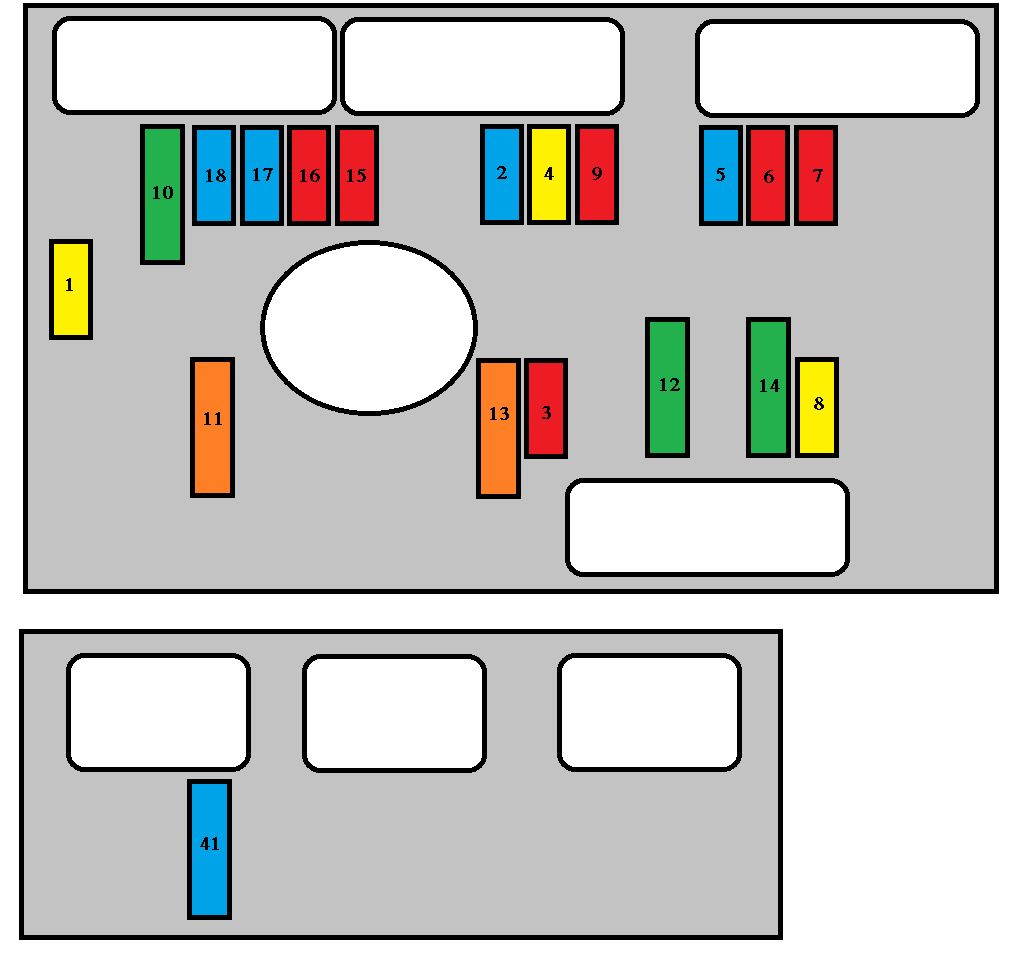
| Pozycja | Amperaż [A] | Chroniony obwód / funkcja |
|---|---|---|
| F1 | 20 | Engine control ECU and radiator cooling fan high-speed relays |
| F2 | 15 | Horn |
| F3 | 10 | Front and rear washer pumps |
| F4 | 20 | Headlamp washer pump, where fitted |
| F5 | 15 | Fuel pump and evaporative canister purge solenoid, depending on engine |
| F6 | 10 | Four-speed automatic gearbox ECU, selector lock, control switch, fan relay and optional Xenon equipment |
| F7 | 10 | ABS/ESP ECU and electric power-steering pump controller |
| F8 | 20 / 25 | Starter solenoid control: 20 A in October 2005, or 25 A in the later 2007.5 handbook |
| F9 | 10 | Additional diesel heating, coolant-level warning switch |
| F10 | 30 | Engine management actuators, ignition coils, solenoids, oxygen sensors, injectors and petrol/diesel fuel equipment |
| F11 | 40 | Heater and air-conditioning blower motor |
| F12 | 30 | Front windscreen wiper motor, low and high speeds |
| F13 | 40 | BSI body systems interface supply after ignition |
| F14 | 30 | Secondary air pump on certain 2.0-litre petrol engines |
| F15 | 10 | Right main-beam headlamp |
| F16 | 10 | Left main-beam headlamp |
| F17 | 15 | Left dipped-beam headlamp |
| F18 | 15 | Right dipped-beam headlamp |
| F41 | 15 | Six-speed automatic gearbox electronic control unit |
Later 307 SW Maxi fuse ratings
The post-update layout uses MF3 30 A for ABS/ESP valves, MF4 and MF5 80 A each for BSI supplies and MF6 80 A for the cabin fuse board. They cannot be exchanged with the February 2005 MF ratings solely because the carriers look similar.
| Pozycja | Amperaż [A] | Chroniony obwód / funkcja |
|---|---|---|
| MF1 | 30 / 50 | Radiator cooling fan, 30 A for a 200 W assembly or 50 A for a 400-460 W assembly |
| MF2 | 30 | ABS/ESP hydraulic pump |
| MF3 | 30 | ABS/ESP solenoid valves |
| MF4 | 80 | First main BSI power feed |
| MF5 | 80 | Second main BSI power feed |
| MF6 | 80 | Passenger-compartment fuse carrier main feed |
| MF8 | 70 | Electric power steering pump high-current supply |
Rear socket, tailgate wiper and panoramic shade problems
Rear 12 V socket does not work: Check early cabin F8 (20 A) or late F9 (30 A). If the front socket still works, inspect the rear outlet and its boot-side wiring. Rear wiper stops: Cabin F1 (15 A), followed by the harness in the tailgate hinge and motor connections.
Roof blind is stuck: F5 (30 A) serves front windows and the panoramic shade motor, while F7 (5 A) protects auxiliary shade controls in the early system. This is not the hydraulic roof of a 307 CC. Rear demister fails: Cabin F17 (40 A), rear-glass connections and the heater grid. Starter does not turn: Check the car’s actual 20 A or 25 A engine F8 rating, battery earth strap and starter solenoid rather than inserting a larger fuse.
Parking sensor warning: Later F12 (15 A) is an appropriate supply check. Blower not operating: Under-bonnet F11 (40 A) and blower speed controller. ABS light: Verify correct MF2/MF3 power feeds for the production version and diagnose the wheel sensors if the supply is sound.
Other Peugeot fuse layouts
Compare the conventional Peugeot 307 Break (2005-2008), the older Peugeot 307 SW (2003), the Peugeot 307 (2001-2004) and the folding-roof Peugeot 307 CC (2006-2008). Their electrical equipment and Maxi fuses are not universally interchangeable.
Technical references: Peugeot 307 SW Owner’s Manual dated 28 February 2005, Peugeot 307 manuals of 1 October 2005 and 2007-2007.5, and the source model-specific fuse charts.